Plan YOUR Work!

Work YOUR Plan!

Don't tell me where your priorities are.

Show me where you spend your money and I'll tell you what they are.

-James W. Frick

Showing posts with label Apple. Show all posts

Friday, September 7, 2012

Notice Anything About These Successful People?

Yahoo! Finance posted an article on the habits of People Who Worked Incredibly Hard to Succeed. A couple very important things stand out from the article:

1. Successful people start their day EARLY.
2. Successful people work hard to get more successful.
3. Hard work really does pay off.

I listen to The Blueprint to Success Mixtape by Eric Thomas every morning, sometimes 3 or 4 times. it motivates me. I'm still in the process of developing my routine to be successful, but I think that and some of the other small things I am doing are a good start.

Take a Look:

1. NBA legend Michael Jordan spent his off seasons taking hundreds of jump shots a day
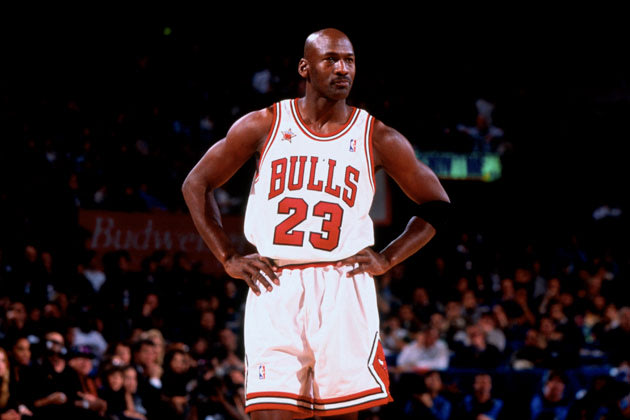

Sam Forencich/NBAE via Getty Images

Michael Jordan had prodigious physical gifts. But as his long-time coach Phil Jackson writes, it was hard work that made him a legend. When Jordan first entered the league, his jump shot wasn't good enough. He spent his off season taking hundreds of jumpers a day until it was perfect.

In a piece at NBA.com, Jackson writes that Jordan's defining characteristic wasn't his talent, but having the humility to know he had to work constantly to be the best.  

2. Starbucks CEO Howard Schultz continues to work from home even after putting in 13 hour days
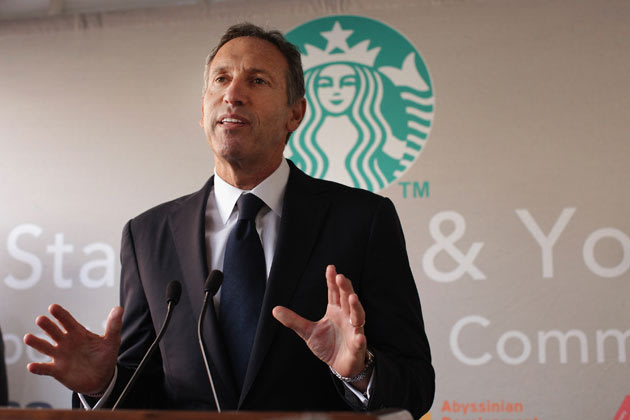


Spencer Platt/Getty Images


Starbucks CEO Howard Schultz must be a frequent consumer of his company's products to maintain his frenetic schedule. Since returning to turn around the company, he gets into the office by 6 in the morning and stays until 7.

Schultz continues talking to overseas employees even later at night from home. He goes into the office on Sundays and reads emails from his thousands of employees on Saturdays.

3. Dallas Mavericks owner Mark Cuban didn't take a vacation for seven years while starting his first business
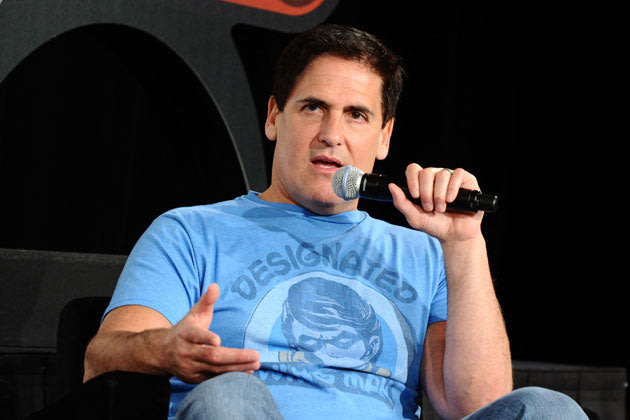

Michael Buckner/Getty Images for Reality Rocks


At first glance, the amazing success of Mavericks owner and entrepreneur Mark Cuban looks like a stroke of luck. He sold his first company at the peak of its value, and got into technology stocks at exactly the right time.

Cuban writes on his blog that it took an incredible amount of work to benefit from his luck. When starting his first company, he routinely stayed up until two in the morning reading about new software, and went seven years without a vacation.

4. Phillies pitcher Roy Halladay's workouts are so intense, others can't make it halfway through them


Rich Schultz/Getty Images


Cy Young award winning pitcher Roy Halladay is one of the hardest working man in baseball. According to Sports Illustrated, he routinely puts in a 90 minute workout before his teammates make to the field.

His former pitching coach told SI that when other pitchers attempted one of his workouts, none of them could complete half of it. His pre-game preparation is so intense that he had a personal entrance card to his former team's training facilities.

5. GE CEO Jeffrey Immelt spent 24 years putting in hundred hour weeks
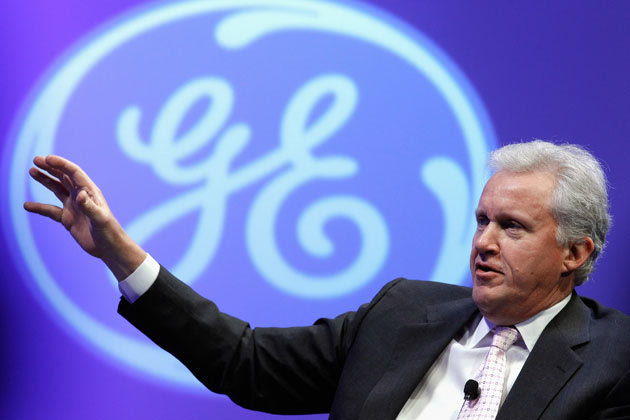

Chip Somodevilla/Getty Images


A 2005 Fortune article on GE CEO Immelt describes him as "The Bionic Manager". The article highlights his incredible work ethic, he worked 100 hour weeks for 24 years. Immelt strictly divides that time, devoting a specific portion of each day to deal with every part of his business.

All of that comes after a 5:30 A.M. workout where he's already reading the papers and watching CNBC.

6. Apple CEO Tim Cook routinely begins emailing employees at 4:30 in the morning
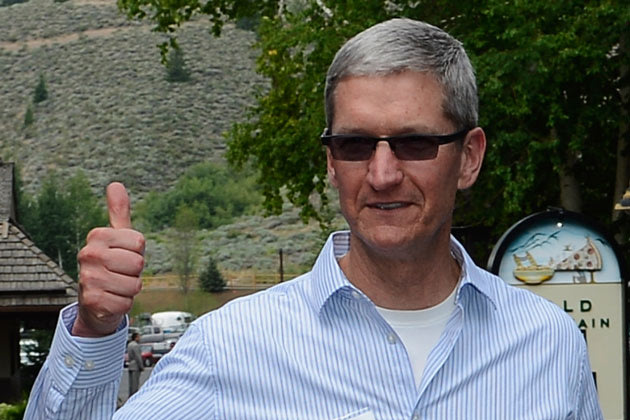

Kevork Djansezian/Getty Images


Steve Jobs left incredibly big shoes for Tim Cook to fill. However, the man got the top job for a reason. He's always been a workaholic, Fortune reports that he begins sending emails at 4:30 in the morning.

A profile in Gawker reveals that he's the first in the office and last to leave. He used to hold staff meetings on Sunday night in order to prepare for Monday.

7. American Idol host Ryan Seacrest hosts a radio show from 5 to 10 A.M. and runs a production company while appearing seven days a week on E!
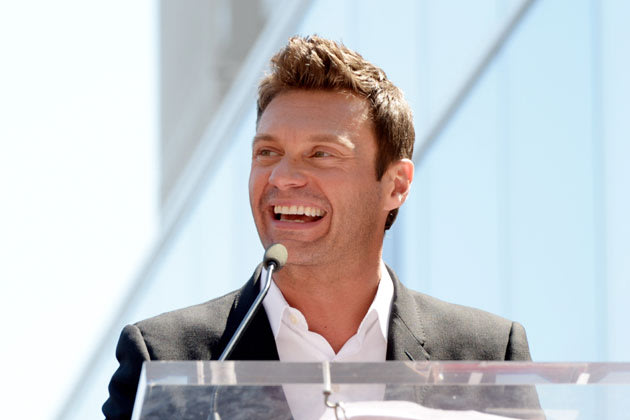

Kevin Winter/Getty Images


Seacrest told the New York Times that even as a young child,  his goal was to be a “a classic iconic broadcaster". He's moved towards that goal by taking on a preposterous workload.

In addition to hosting American Idol, Seacrest appears 7 days a week on E!, hosts a daily radio show from 5 to 10 A.M., appears on the Today show, runs a television production company, and recently received $300 million in private equity funding to acquire more businesses.

8. Nissan and Renault CEO Carlos Ghosn flies more than 150,000 miles a year
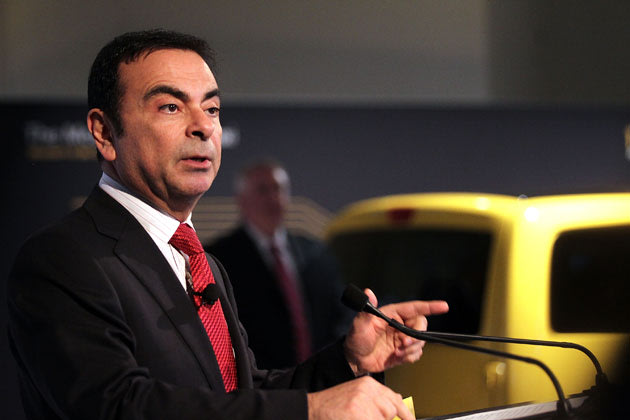


Spencer Platt/Getty Images


Carlos Ghosn runs two of the world's largest automakers, which should tell you something about his work ethic. A profile in Forbes describes how Ghosn works more than 65 hours a week, spends 48 hours a month in the air, and flies more than 150,000 miles a year.

His turnaround of Nissan is the subject of many case studies. Within a month he deployed a system that completely changed ingrained practices, helping save a company many thought irredeemable. 

9. Venus and Serena Williams were up hitting tennis balls at 6 A.M. from the time they were 7 and 8 years old
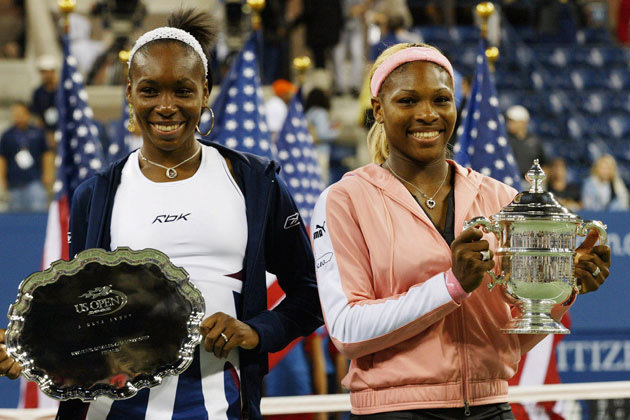

Bongarts/Getty Images


The Williams sisters, who have dominated women's tennis for many years, were all but raised on the court.

From an extremely young age, their life was, as described to the New York Times "..get up, 6 o’clock in the morning, go to the tennis court, before school. After school, go to tennis..." The Williams family was built around propelling the two towards success in the sport.

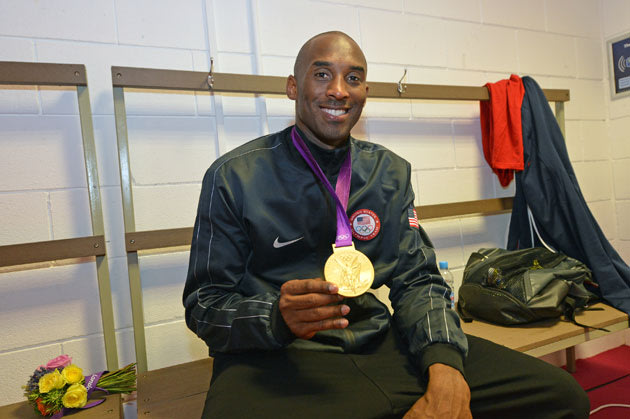
10. Lakers superstar Kobe Bryant completely changed his shooting technique rather than stop playing after breaking a finger

Jesse D. Garrabrant/NBAE via Getty Images

Nobody in basketball drives their body harder than Kobe Bryant. A profile in GQ describes how he has changed his shooting technique repeatedly rather than take time for dislocated and broken fingers.

When growing up outside of Philadelphia, ESPN describes how Kobe would spend his free time endlessly practicing jump shots in the park. The Laker's staff finds him doing the same thing at their practice facility at all hours of the day and night.

What can you start doing today to be more successful, tomorrow?

Tuesday, July 3, 2012

8 Risky Business Investments That Paid Off Big

Personal Finance 4 The People is pleased to team with others who are able to share their expertise in various areas. We hope to combine our efforts to bring a greater financial effort in order to help you reach YOUR Financial Independence. Today's guest post comes to us from Online Business Degree.

Business is not for the overly cautious or the faint of heart. If you’re going to run a business or invest in a company, you have to be willing to take risks, big and small. Sometimes these risks become regrets, but sometimes they turn out to be the best decision you’ve ever made. Here are eight risky business investments that paid off big.
  1. Target:


    Target has prided itself on being a unique, consumer-savvy retailer that is above Wal-Mart and K-Mart. But well before Target became the store of choice for soccer moms and yuppies, it was just another low-brow discount retailer trying to keep up with its competitors. A big turning point in Target’s success was adding affordable versions of designer merchandise made by big-name designers like Issac Mizrahi, Mossimo Giannulli, Proenza Schouler, Rodarte, and many more. The collaboration was a risky, yet lucrative investment that has helped Target expand its consumer demographics and become a well-respected retailer.
  2. Harley-Davidson:


    Considering how incredibly popular Harley-Davidson is today, it’s hard to believe that the motorcycle company was ever on the verge of bankruptcy, but it’s true. Harley-Davidson experienced near-bankruptcy from 1969 to 1981 when the American Machine and Foundry (AMF) bought the company and turned it upside down. AMF’s decision to streamline production and slash the workforce resulted in labor strikes, low quality motorcycles, and declining sales. It wasn’t until AMF sold struggling Harley-Davidson to investors Vaughn Beals and Willie G. Davidson for $80 million that the company started to turn a profit again. Harley-Davidson returned to its beloved retro styling and started using high-quality parts, which helped bring back the buyers one by one. If those brave investors hadn’t taken a chance on Harley-Davidson and helped restructure its name, the “Hog” might have been ancient history.
  3. Apple:


    Apple lovers around the world will find it hard to believe that one of the fastest-growing and most successful companies in the world was once close to bankruptcy. During the late ’90s, Apple was struggling to meet sales goals and internal power struggles were greatly to blame. After former CEO Gil Amelio was let go and Steve Jobs was brought back to fill his spot, things began to change for the better. Jobs helped restructure the brand and launch the revolutionary products that the brand is now known for. Jobs’ return to Apple proved to be a risky, but crucial business decision that helped steer the company toward infinite success.
  4. J. Crew:


    Believe it or not, but the uber successful retailer, J. Crew, was once on the fritz with plummeting sales and branding issues. It wasn’t until Millard Drexler, former Gap Inc. chief, came to the rescue in 2003 and helped turn the company around for the better. Drexler is credited for saving J. Crew from bankruptcy by rebranding the store and giving it a new identity. Under Drexler’s leadership, J. Crew experienced a dramatic increase in sales, earning $3.8 million in 2005. Revenues have continued to increase every year and investors couldn’t be happier with what brave Mr. Drexler has done for J. Crew.
  5. Google:


    Google is one of the largest companies in the world and its founders, Larry Page and Sergey Brin, are some of the richest entrepreneurs to date. But before Google became the giant corporation that it is today, it was almost sold for a shy $1 million to Excite CEO George Bell in 1999. Brin and Page nearly gave up their would-be fortune because the search engine they built was taking up too much of their time and distracting them from their graduate studies. The risky transaction did not happen because Bell rejected their offer and negotiated them down to $750,000. Their patience paid off months later when big name venture capital firms Kleiner Perkins Caufield & Byers and Sequoia Capital invested $25 million in Google.
  6. TOMS Shoes:


    TOMS Shoes may be as well known for their charitable shoe drop as they are for their fashion. Since the company launched in 2006, TOMS has provided new shoes to children in need through their non-profit organization, Friends of TOMS. The One for One program has given away more than 1 million pairs of shoes to children in more than 20 countries worldwide. Founder Blake Mycoskie created TOMS with the original intention that for every pair of shoes sold, a new pair would go to a child in need. After developing his idea, Mycoskie sold his online driver education company and financed the shoe company himself. He has remained true to his company’s mission and, although he may have lost profits in the process, his innovative business model has certainly paid off big.
  7. Whole Foods Market:


    The story of Whole Foods Market begins with four brave businesspeople living in Austin, Texas, who decided that the natural foods industry was in need of a leading supermarket. Founders John Mackey and Renee Lawson Hardy, owners of Safer Way Natural Foods, and Craig Weller and Mark Skiles, owners of Clarksville Natural Grocery, were determined to make this happen even though popularity for local, organically grown foods was still rather low in the late ’70s. In 1980, they decided to leave their small natural food stores behind and invest in a game-changing supermarket that we’ve now come to know as Whole Foods Market. The organic grocer became an instant success and the founders’ hard work definitely paid off big.

Friday, October 7, 2011

Ponder This...

Here’s to the crazy ones.
The misfits, the rebels, the troublemakers.
The round pegs in the square holes.
The ones who see things differently.
They’re not fond of rules.
And they have no respect for the status quo.
You can quote them, disagree with them, glorify or vilify them.
About the only thing you can’t do is ignore them.
Because they change things.
They push the human race forward.
While some may see them as the crazy ones, we see genius.
Because the people who think they are crazy enough to change the world…
are the ones who do. ~ Steve Jobs